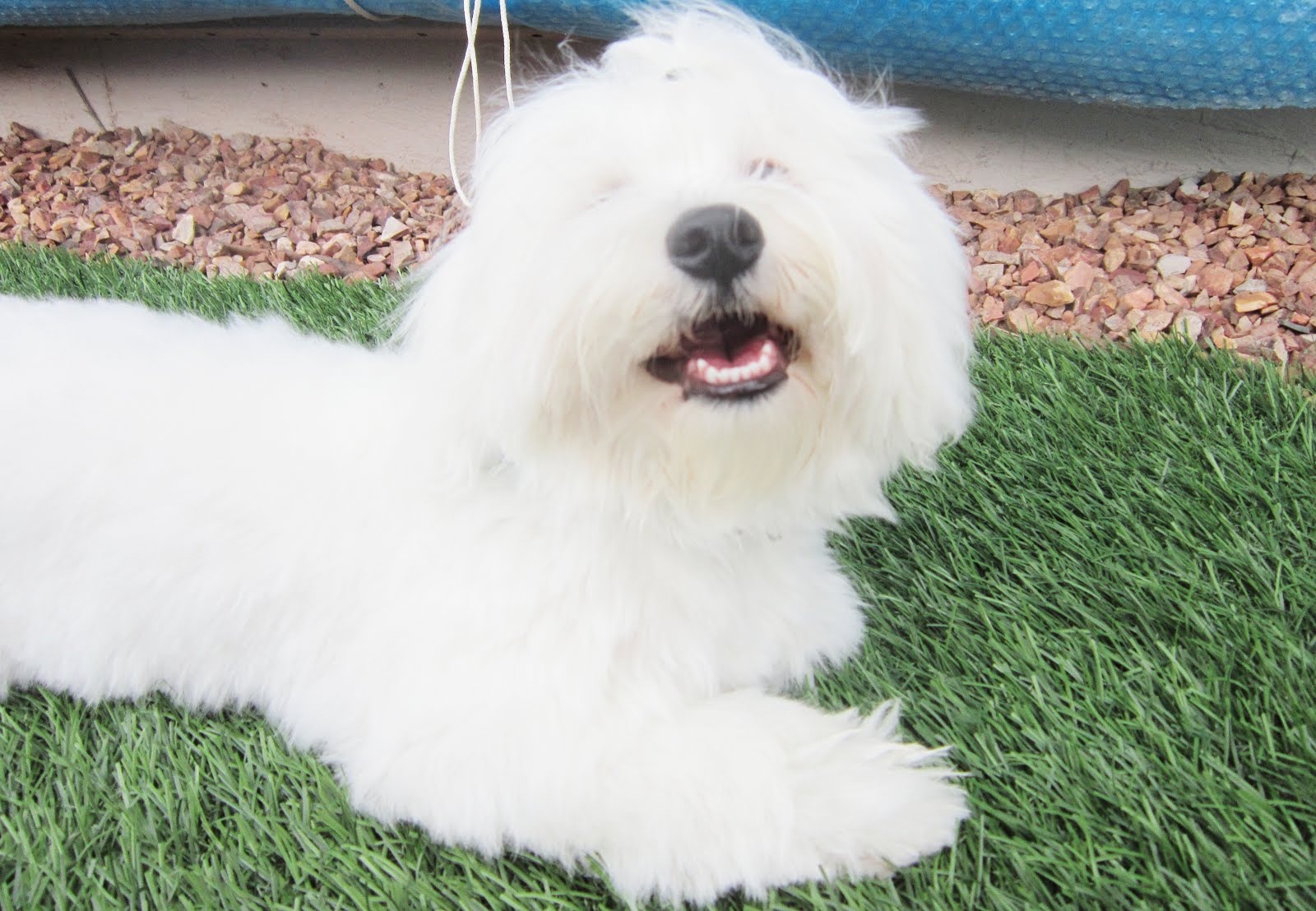

The Havanese dog belongs to the family of Dogs
called Bichons. The French word Bichon Frise means "fleecy dog" or
"curly lap dog".
"Bichon"; refers to the bearded appearance
of the breed, as the word "barbichon"; means little beard, the word
"Frise" means curly.
The Bichon Havanese originated in Cuba from an
earlier breed known as Blanquito de la Habana (also called Havanese Silk Dog -
a now extinct breed).
The Bichon
Havanese adorned and enlivened the homes of aristocratic Cubans during the 18th
& 19th centuries. Bichon Lapdogs were being brought to Cuba in the 17th
century from Europe. They adapted to the
hot climate and customs of Cuba.
Eventually, these conditions gave birth to a
different dog, smaller than its predecessors, with a completely white coat of a
silkier texture. This dog was the Blanquito de la Habana.
In the 19th century, the Cubans took to liking the
French and German Poodles, which were crossed with the existing Blanquito to
create today's Bichon Havanese. In the
development of the Havanese, the Blanquito was much more dominant than the
poodle.
These little dogs are good for allergy sufferers, as
they are hypo-allergenic. They do not
shed, but need regular brushing at home to maintain their long silky
coats. You can trim them to a puppy
coat, which will eliminate some of the upkeep, but you might want to keep their
tail, ears, and hair on their face and chin long as it gives them the typical
Havanese look
They live a long time, 14-16 years and are sturdy
and healthy for such a small dog. I am
convinced they know they were important dogs for royalty and wealthy Cubans in
the past, and so still expect to be treated accordingly.
On the other hand, you will rarely find a sweeter,
more loyal and loving companion. They’re
just entitled – to your furniture, to you, to being involved in everything you
do – they are affectionately referred to as Velcro dogs.